









The European Space Forum 2022 examined the innovative programmes, initiatives and policies being put forward. Across two days, 60 speakers, 280 in-person delegates and over 400 speakers gathered to discuss the most pertinent topics across the EU space landscape.
The main topics of the event included:
Josef Aschbacher
Evi PapantoniouMrs Evi Papantoniou is Director for Space (acting) in the European Commission – Directorate-General for Defence Industry and Space (DEFIS), responsible for EU Space Policy and EU space flagships, Copernicus and Galileo /EGNOS. She is responsible in particular for actions supporting the EU aerospace ecosystem, as well as for relations with the European Space Agency and the EU Space Programme Agency.
Until December 2019, she was the Head of Unit in the Directorate-General for the Internal Market, Industry, Entrepreneurship and SMEs (DG GROW) – responsible for legal and inter-institutional aspects of Galileo/EGNOS, the EU satellite navigation programme. Previously, she contributed in setting-up the EU Defence Fund and dealt with EU response on countering hybrid threats.
She also worked in European Commission Task Force for Greece, assisting the Greek Government in the EU bailout Programme implementing structural reforms in the area of business environment and justice reform.
As competition lawyer by training, she worked for several years in DG Competition, on competition enforcement in anti-trust, but also state aid control.
Before joining the European Commission, she worked in the European Court of Justice in Luxembourg and as a competition lawyer in Paris.
She holds a Master of Laws (LLM) in EU law from the College of Europe in Bruges.
Rodrigo da CostaOn 16 October 2020, Rodrigo da Costa took up his duties as Executive Director of the European Union Agency for the Space Programme (EUSPA), formerly the European GNSS Agency (GSA). Prior to this, he was the Galileo Services Programme Manager from March 2017.
Before joining the GSA, Rodrigo da Costa held several senior project management, business development, and institutional key account management positions in the space industry, in the areas of human space flight, exploration, launchers and R&D.
Rodrigo da Costa holds a degree in Aerospace Engineering from the “Instituto Superior Tecnico” in Lisbon, a Master’s degree in Aerospace Engineering from the University of Delft, and an MBA from the EuroMBA consortium of Business Schools.”
Rajeev Suri Rajeev was appointed as Inmarsat’s Chief Executive Officer in March 2021 and as Chair of the Global Satellite Operators Association (GSOA) in March 2022.
He joined Inmarsat from Nokia, where he was most recently President and Chief Executive Officer. From 2009 to 2014 Rajeev was Chief Executive Officer of Nokia Solutions and Networks. During his tenure as CEO, he transformed Nokia into a top two telecommunications infrastructure company, led the consolidation of the sector from ten to three major players, positioned Nokia as a leader in a world connected by 5G and shaped by increasing digitalisation and automation. Under his leadership, Nokia acquired the networks businesses of Siemens, Motorola, Alcatel-Lucent, including the famed Bell Labs, successfully expanded into enterprise vertical markets, created the world’s leading standalone telecom software business, significantly grew the annual recurring revenue patent licensing business and engineered the return of the Nokia brand to mobile phones.
Rajeev has lived and worked in the Middle East, Asia, Africa and Europe. In March 2021, he was reappointed as a Commissioner of the United Nations Broadband Commission. He was Co-Chair of the digitalisation task force for the B20 and member of various digital and healthcare committees at the World Economic Forum. Rajeev was a member of the Chinese Premier’s Global CEO Council from 2014 to 2020, a recipient of China’s Marco Polo award; the highest honour awarded to an international business person from the Chinese government. Rajeev is an engineering graduate in Electronics and Communications and has been awarded an Honorary Doctorate by Manipal University.
André-Hubert RousselBio will be updated soon.
Marc SerresMarc Serres is the Chief Executive Officer of the Luxembourg Space Agency. He heads the Luxembourg Delegation at the European Space Agency (ESA) and represents Luxembourg in the Council of ESA. He is Member of the International Academy of Astronautics.
He has been Director of Space Affairs at the Ministry of the Economy of Luxembourg since January 2014. Before joining the Ministry of the Economy, Marc Serres managed Luxembourg’s relations with ESA at the Ministry of Higher Education and Research as an industrial policy officer for 8 years. Prior to becoming a civil servant, he spent 5 years in the satellite communications antenna manufacturing industry within the company HITEC Luxembourg S.A., first as a Project Engineer and finally as Chief Engineer for satcom products development.
Marc Serres holds a PhD in optoelectronics and a Master in electrical engineering with specialty in microwave frequencies, both from the Université catholique de Louvain in Belgium.
The inaugural edition of the European Space Forum in 2021 was held virtually, and brought together more than 700 key stakeholders and thought leaders from across the space and satellite sectors. Across 2 full days of interactive discussion and debate, the following main topics were discussed:
Thierry BretonThierry Breton is the EU Commissioner for Internal Market, in charge of industry, digital, space, defence, audiovisual and tourism. Engineer in computer science, he began his career as an entrepreneur in the IT sector. A French business leader, he was CEO of Thomson electronics (1997-2002), France Telecom (2002-2005) and Atos (2009-2019). French Minister of the Economy, Finance and Industry (2005-2007), he was a teacher at Harvard (2007) and authored a number of technology thrillers published in more than 40 languages.
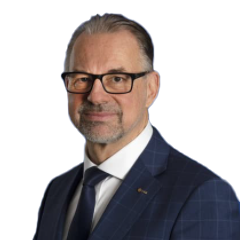
Josef AschbacherJosef Aschbacher, of Austrian nationality, is a geophysicist by education. He joined ESA in 1990. Throughout his career he held various positions in different locations. He also worked for the European Union. In 2016 he became ESA’s Director of Earth Observation, and in 2021 he took office as ESA’s Director General.
Rodrigo da CostaOn 16 October 2020, Rodrigo da Costa took up his duties as Executive Director of the European Union Agency for the Space Programme (EUSPA), formerly the European GNSS Agency (GSA). Prior to this, he was the Galileo Services Programme Manager from March 2017.
Before joining the GSA, Rodrigo da Costa held several senior project management, business development, and institutional key account management positions in the space industry, in the areas of human space flight, exploration, launchers and R&D.
Rodrigo da Costa holds a degree in Aerospace Engineering from the “Instituto Superior Tecnico” in Lisbon, a Master’s degree in Aerospace Engineering from the University of Delft, and an MBA from the EuroMBA consortium of Business Schools.”
Matthias PetschkeBio to be updated soon.
André-Hubert RousselBio will be updated soon.
Stephen SpenglerStephen Spengler is a 36-year telecommunications and satellite industry veteran with experience in the media, broadband, government, and internet sectors. Mr. Spengler is chief executive officer of Intelsat, the world’s largest satellite services provider. He is current the chairman of the EMEA Satellite Operators Association, where he convenes a Board of other satellite operator Chief Executives around critical issues affecting the industry.
Mr. Spengler’s key accomplishments at Intelsat include the development of Intelsat’s next generation of managed service solutions for an array of network applications; a $2B investment in the groundbreaking Intelsat Epic high-throughput satellite network and a series of strategic equity investments to catalyze satellite innovations. He is currently leading Intelsat’s initiative to establish the industry’s first software defined satellite/terrestrial network based on the 5G standard, designed to provided unprecedented network speeds, economics and coverage.
Mr. Spengler is a member of the United Nations Broadband Commission for Sustainable Development and serves on the corporate boards of Intelsat SA and Kymeta Corporation. He has testified before the U. S. Senate Committee on Commerce, Science, and Transportation regarding the future of the commercial satellite industry.
Mr. Spengler joined Intelsat in 2003, and has served in executive roles of increasing responsibility, including sales, marketing, strategy, and business development. These responsibilities leveraged Mr. Spengler’s global orientation and thought leadership. He has generated new business and forged strategic relationships across the world in developed and developing markets and has expertise in meeting the challenges and opportunities that exist in international markets and emerging technologies. Prior to assuming his current role in 2015, he was the president and chief commercial officer of Intelsat. He held senior management positions at Viasat Satellite Networks, Scientific-Atlanta Europe, GTE Spacenet International, and GTE Corporation before joining Intelsat. Mr. Spengler earned a Bachelor of Arts degree from Dickinson College and a Master of Business Administration from Boston University.
Intelsat owns and operates a fully integrated network of over fifty commercial communications satellites that deliver broadband connectivity to businesses and communities in over 200 countries. It provides diversified communications services to the world’s leading media companies, fixed and wireless telecommunications operators, data networking service providers for enterprise and mobile applications, multinational corporations and ISPs. Intelsat is the leading provider of commercial satellite capacity to the U.S. government and other governments.
Sorin DucaruAmbassador Sorin Dumitru Ducaru is the Director of the European Union Satellite Centre (SatCen) since June 2019. He has previously held the position of NATO Assistant Secretary General and Head of the NATO Emerging Security Challenges Division, as well as the positions of Romania’s ambassador to NATO, USA and to the UN in New York. He also assumed various positions in the Romanian Ministry of Foreign Affairs (MFA) such as: spokesperson of the MFA, director of the Minister’s Office and head of the Directorate for NATO and Strategic Issues.
Ambassador Ducaru’s professional background reflects a quite rare blend of technical and political studies. He is holding degrees in Applied Electronics & Computer Studies (BS, Bucharest Polytechnic University), Political Science & International Relations (M.Phil, University of Amsterdam) and International Economic Relations and Institutional Management (Ph.D, Academy of Economic Studies, Bucharest). He has been intensely engaged intellectually and professionally bridging the technology-policy gap and the impact of technology upon security.
Ambassador Ducaru has been also engaged in academic and scientific activity, as associate or guest lecturer at the National University for Political Studies (Bucharest, Romania), NATO Defence College (Rome, Italy), Kennedy School of Government, Harvard University (Cambridge, USA), Leiden University (Netherlands).
He is the Honorary Chairman of the Scientific Board of the New Strategy Center (Bucharest), European Council of Foreign Relations Member, Advisory Board Member of Digital Society Institute (Berlin), the NATO Cybersecurity Centre of Excellence (Tallin), Special Advisor to the Global Commission on the Stability of Cyberspace (The Hague) and former Senior Fellow at the Hudson Institute (Washington DC).
In 2002, Ambassador Ducaru was awarded the title of “Ambassador of the Year” by the Romanian MFA and, in 2008, the rank of Knight of the National Order “The Star of Romania” by the president of Romania. He is married and has two teenage children.
If you are interested in speaking, sponsorship and visibility opportunities, please contact Karolina Stankiewicz at space@forum-europe.com / +44 (0) 2920 780 070.
Note: All timings are in Central European Time (CET).
Direct-to-Device (D2D) satellite connectivity is moving rapidly from technical concept to strategic reality. What began as a discussion about spectrum feasibility and licensing models has evolved into a broader policy debate touching on digital sovereignty, industrial competitiveness, and the future architecture of Europe’s converged terrestrial and non-terrestrial networks. Twelve months on from the RSPG Opinion on D2D and related Single Market issues, CEPT is advancing technical work, Member States are assessing national authorisation approaches, and questions remain around how existing EU legislation accommodates this emerging model. As deployments accelerate globally and WRC-27 approaches, Europe faces a pivotal moment to clarify its regulatory direction, define the appropriate level of coordination, and determine how D2D fits within its broader connectivity and strategic ambitions. This session will take stock of progress since the RSPG Opinion, examine whether the current framework is fit for purpose, and explore the policy choices that may be required to ensure that D2D develops in a way that supports innovation, competition and the integrity of the Single Market.
As Europe considers the strategic and regulatory framework for Direct-to-Device connectivity, the technical feasibility of enabling satellite-to-device services in harmonised mobile (IMT) bands remains a central question. Existing EU spectrum harmonisation decisions were designed for terrestrial networks and do not yet include technical parameters for space-based transmitters communicating directly with standard mobile devices. Following the RSPG Opinion, CEPT is advancing compatibility studies to assess interference scenarios, protection criteria and operational constraints, while 3GPP continues work on Non-Terrestrial Network (NTN) standards. With WRC-27 preparations underway and commercial trials progressing globally, clarity is needed on whether D2D-IMT can be introduced into European mobile bands without undermining terrestrial network performance, spectrum rights or cross-border coordination. This session will examine the technical and spectrum-management foundations required to move from concept to implementation.
As satellite Direct-to-Device (D2D) moves from proof-of-concept to early commercial deployment, the debate is shifting from “Can it work?” to “Where does it make strategic and commercial sense?”. The early narrative, which often positioned stakeholders in two distinct camps, advocating either traditional satellite (MSS) spectrum or terrestrial mobile (IMT) spectrum exclusively, is increasingly giving way to a more pragmatic reality. Providers are now exploring hybrid spectrum models that combine MSS and IMT solutions, reflecting both regulatory constraints and evolving business opportunities. This shift raises important questions about which spectrum bands, partnership structures and revenue models are best suited to particular use cases in the short term and how that balance may evolve over time. Against this backdrop, this session will examine how the D2D ecosystem is developing, focusing on the practical use cases and commercial pathways most likely to shape the market. It will explore where the strongest value proposition lies – whether in rural coverage extension, resilience and disaster recovery, IoT connectivity, maritime and aviation services, or mission-critical communications – and discuss how spectrum strategy, technological capability and operator partnerships will determine the scale, sustainability and long-term positioning of D2D within Europe’s broader connectivity landscape.
Direct-to-Device (D2D) satellite connectivity is moving rapidly from technical concept to strategic reality. What began as a discussion about spectrum feasibility and licensing models has evolved into a broader policy debate touching on digital sovereignty, industrial competitiveness, and the future architecture of Europe’s converged terrestrial and non-terrestrial networks. Twelve months on from the RSPG Opinion on D2D and related Single Market issues, CEPT is advancing technical work, Member States are assessing national authorisation approaches, and questions remain around how existing EU legislation accommodates this emerging model. As deployments accelerate globally and WRC-27 approaches, Europe faces a pivotal moment to clarify its regulatory direction, define the appropriate level of coordination, and determine how D2D fits within its broader connectivity and strategic ambitions. This session will take stock of progress since the RSPG Opinion, examine whether the current framework is fit for purpose, and explore the policy choices that may be required to ensure that D2D develops in a way that supports innovation, competition and the integrity of the Single Market.
As Europe considers the strategic and regulatory framework for Direct-to-Device connectivity, the technical feasibility of enabling satellite-to-device services in harmonised mobile (IMT) bands remains a central question. Existing EU spectrum harmonisation decisions were designed for terrestrial networks and do not yet include technical parameters for space-based transmitters communicating directly with standard mobile devices. Following the RSPG Opinion, CEPT is advancing compatibility studies to assess interference scenarios, protection criteria and operational constraints, while 3GPP continues work on Non-Terrestrial Network (NTN) standards. With WRC-27 preparations underway and commercial trials progressing globally, clarity is needed on whether D2D-IMT can be introduced into European mobile bands without undermining terrestrial network performance, spectrum rights or cross-border coordination. This session will examine the technical and spectrum-management foundations required to move from concept to implementation.
As satellite Direct-to-Device (D2D) moves from proof-of-concept to early commercial deployment, the debate is shifting from “Can it work?” to “Where does it make strategic and commercial sense?”. The early narrative, which often positioned stakeholders in two distinct camps, advocating either traditional satellite (MSS) spectrum or terrestrial mobile (IMT) spectrum exclusively, is increasingly giving way to a more pragmatic reality. Providers are now exploring hybrid spectrum models that combine MSS and IMT solutions, reflecting both regulatory constraints and evolving business opportunities. This shift raises important questions about which spectrum bands, partnership structures and revenue models are best suited to particular use cases in the short term and how that balance may evolve over time. Against this backdrop, this session will examine how the D2D ecosystem is developing, focusing on the practical use cases and commercial pathways most likely to shape the market. It will explore where the strongest value proposition lies – whether in rural coverage extension, resilience and disaster recovery, IoT connectivity, maritime and aviation services, or mission-critical communications – and discuss how spectrum strategy, technological capability and operator partnerships will determine the scale, sustainability and long-term positioning of D2D within Europe’s broader connectivity landscape.


With cutting-edge capabilities and decades of experience, Airbus has all that it takes to design, develop and operate major space systems and deliver powerful insights with our space-based services.
Around the globe, commercial and government customers alike rely on Airbus’ leading space technology and solutions.
We offer telecommunications satellites for any mission, very-high-resolution Earth observation instruments, unique deep space missions, flawless International Space Station operations and are a key contributor in bringing humans back to the moon. From the smallest electronic parts and spacecraft equipment to in-orbit delivery of satellites and associated services, reaching for the stars is our daily business.
Airbus is a global leader in aeronautics, space and related services.


Astroscale is the first private company with a vision for the safe and sustainable development of space for the benefit of future generations, and the leading company solely dedicated to on-orbit servicing across all orbits.
Astroscale is developing innovative and scalable solutions across the spectrum of on-orbit servicing, including life extension, in situ space situational awareness, end of life, and active debris removal, to create sustainable space systems and mitigate the growing and hazardous build-up of debris in space.

Astroscale is also defining business cases and working with government and commercial stakeholders to develop norms, regulations, and incentives for the responsible use of space.



Neuraspace is a pioneer company in the use of AI/ML to fight Space Debris and collisions that can destroy satellites, enabling satellite operators to detect up to 50% more high-risk collisions that have been so far undetected and reducing the need for human intervention up to 2/3.
Neuraspace allows satellite operators to reduce operational manpower efforts, in particular for large constellations. The number of false alerts will be fewer, and the time between close approach and manoeuvre decision will be less. Thus, you will save on fuel and time, while collisions and the menace of space debris will be minimized.
Neuraspace provides an end-to-end solution centered around: (1) Data Fusion; (2) AI and Machine Learning; and (3) Manoeuvring Automation.
To contribute to the evolution of spacecraft operations, Neuraspace aims to solve the space debris problem by protecting satellites operators from the losses caused by collisions, liabilities from leaving debris in orbit and allowing insurance companies to better price the risk that each satellite poses.


Drawing on over 40 years of experience and a unique combination of skills, expertise and cultures, Thales Alenia Space delivers cost-effective solutions for telecommunications, navigation, Earth observation, environmental management, exploration, science and orbital infrastructures. Governments and private industry alike count on Thales Alenia Space to design satellite-based systems that provide anytime, anywhere connections and positioning, monitor our planet, enhance management of its resources, and explore our Solar System and beyond. Thales Alenia Space sees space as a new horizon, helping to build a better, more sustainable life on Earth. A joint venture between Thales (67%) and Leonardo (33%), Thales Alenia Space also teams up with Telespazio to form the parent companies’ Space Alliance, which offers a complete range of services. Thales Alenia Space posted consolidated revenues of approximately 2.15 billion euros in 2021 and has around 8,900 employees in 10 countries with 17 sites in Europe and a plant in the US.